Monday, March 8, 2010

Film Genres

"A genre is a classification of a group of movies in which the individual films share similar subject matter and similar ways of organizing the subject through narrative and stylistic patterns" (The Film Experience pp.332). The most popular film genres among the public audience are comedy, drama, action/adventure, horror, western and musical. Each genre has primary formulas and conventions which reflect a specific culture or specific historical moments. Genres were immediately put into effect during the early stages of film, although there were not many of them because film was just starting out. The film industry did expand and so did the audience that followed it. As a result, the number of types of films also expanded including: “scenes from the theater, sporting events, and slapstick comedies. And as outdoor filming increased, the first westerns became common subjects” (The Film Experience pp.334).

Between the time period of 1920-1940 studios were formed and certain studios were associated with a certain genre of film. Companies that hold a large name today were identified with these genres. Warner Bros. identified with gangster films by the 1930s, Columbia Pictures was associated with westerns, Universal was identified with horror film, and MGM was associated with musicals and melodramas. All of these companies still remain strong in Hollywood.


1948 to the 1970s was known as the postwar film genre era. 1948 is when the Paramount decision took place, which is when “the Supreme Court ruled that the major studios violated antitrust laws by monopolizing the film business” (The Film Experience pp.335). This undid the studio system and a cornerstone of movie genres. In the 1960s and 1970s independent films came to the surface and started challenging the top genre films. Films also depended upon the recycling on the American culture as well as other cultures throughout the world.


The new Hollywood era began in 1975 in which box office hits such as Jaws (1975) and Star Wars (1977) hit movie theatres across the nation. The dazzling special effects displayed in both of these films delivered a viewing experience that was never before experienced. The success of the films the first time around prompted the directors to release a sequel, and in Star Wars case release six movies. These progressions also paved the way for films that were created down the road to be open to more than one movie, most commonly trilogies.
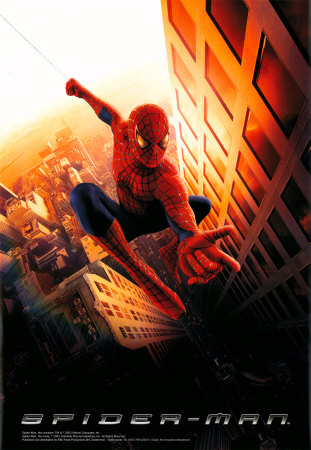


Throughout the progression of the film industry more ideas became relevant to directors such as turning a comic book or a video game into a film. However, this was not always a successful feat. The Spider-Man trilogy (2002,2004,2007) is an example of a successful comic book turned film franchise. On a down note, Mortal Kombat (1995) and its sequel Mortal Kombat: Annihilation (1997) are examples of video game film gone bad. However, there is always some good that goes with the bad and a director cannot hit on a film every time, or it is very rare to see a director produce an award winning film every time. In conclusion, genres play a large part in the attraction of an audience to a specific film and accommodate the viewing needs of every type of person.

Monday, March 1, 2010

Mulholland Drive


"Mulholland Drive" (2001) is a psychological thriller by director David Lynch, which is headlined by Naomi Watts, Laura Elena Harring, and Justin Theroux. The director aimed to take viewers on a wild, confusing, psychological roller coaster. From a personal perspective, "Mulholland Drive" was one of, if not the most, confusing movies that I have ever seen. This film was originally made with plans to become a television series, but after it was presented to television executives, it was rejected. It was left with loose ends because Lynch wanted it to become a television series, so when it became a feature film, an ending was provided to somewhat tie up all of the loose ends. Although, nobody besides David Lynch really knows what transpires as a result to the true ending. This continues speculation and differing opinions throughout the film industry.


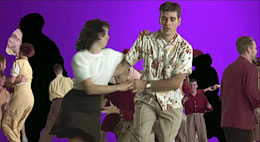
The director gives the audience many clues throughout the course of the film. Although, the viewers have to pay special attention and be able to tie things together, so it is probable they will have to watch the movie a few more times than just once. I for one did not understand the film and could not understand everything that ties the film together. One of the first things that sort of sets up as the first clue given by the director is the jitterbug scene in the beginning of the movie. Although the scene is a little "trippy" it does have a meaning behind it and that may be show of a stepping stone for Betty's move to Hollywood. The jitterbug contest seems to be a just that, a contest. As the film takes place in a modern day time period and not the 1950's or so, so common sense would tell us it is a contest.


Another interesting event is the location of where the accident took place. This location is depicted in both aspects of this film, which is the dream that Diane has and the actual event. During Diane's dream, "Rita" is involved in an accident in which everyone dies but her. During the actual event, Diane is brought to the same location as her dream and is met by Camilla. The first scenario was fiction that was built on the real event of that took place. Also, the line "What are you doing? We don't stop here!" is reprised by both Diane and Rita at the very same place, but have different outcomes. This is just an example of how similar each of these realms were.
The theme of certain places reoccurring throughout the film is noticeable. The restaurant from earlier in the movie "Winkie's" shows up at the beginning of this film and at the end. Also, the restaurant shows up when Diane hires someone in an attempt to kill Camilla. A lot of the locations that were shown throughout Diane's dream were shown throughout the reality, which made the movie even more confusing.

David Lynch purposely did not include an obvious conclusion in this film and continues to make the audience draw their own conclusions by not opening his mouth. Things look as if they will stay that way too.


WORKS CITED

"Mulholland Dr." IMDB.com. Web. 1 Mar. 2010
"Mulholland Dr." wikipedia.org. Web. 1 Mar. 2010
"Lynch's 10 Clues." mulholland-drive.net. Web. 1 Mar. 2010

Monday, February 22, 2010

Narration

Narrative

1. a story or account of events, experiences, or the like, whether true or fictitious.
2. a book, literary work, etc., containing such a story.

The structure of a narrative is made up of two things: the form in which the story is told and the content in which a story holds. The story part of a narrative refers to how the events take place in chronological order, and the plot part of a narrative refers to how the story is being told. Analyzing a narrative structure is simple. There are the five basic questions that have been asked since grade school in order to figure out the basics of something. They are the who, what, where, when, and why’s. Answering the question of “who” will help with naming the main characters that are introduced to a viewer over the course of a film. Answering the question of “what” will help the viewer understand just exactly what is occurring at significant points during the film. Answering the question of “where” gives the answer of where the story is taking place. Answering the question of “when” will enlighten the viewer as to what takes place and when it takes place throughout the course of a movie. Finally, the “why” answers the question which is most commonly wondered at the end of a movie; like why did all of those things happen. It sums up the events that took place throughout the film and put it in perspective for the viewer.


My favorite example of a narrative film is Marc Forster’s “Stranger Than Fiction” (2006), starring Will Ferrell, Maggie Gyllenhaal, Dustin Hoffman, and Emma Thompson. “More self-consciously than most movies, Stranger than Fiction explores the complex and mutually formative relationship between life, narrative, and the movies” (The Film Experience Page 227).


The following is a synopsis courtesy of IMDB.com. “Harold Crick (Will Farrell) is an IRS auditor who almost compulsively measures, quantifies and rationalizes his life. Suddenly, he becomes aware of a voice narrating his life, "accurately and with a better vocabulary." The voice is that of a writer we learn is struggling with writer's block (Emma Thompson), mostly about the best way to make Harold die. When Harold overhears his impending doom, he takes action, and eventually makes his way to a professor of literary theory (Dustin Hoffman), who helps him understand the implications of the narrative life he is leading. The main story line seems to be around a woman he is auditing, played by Maggie Gyllenhaal. Realizing he could die at any moment, Harold begins to break free of his limited, orderly life, and joins Gyllenhaal in a romantic relationship. He tracks down Thompson and confronts her with the truth: if she writes about his death, then he will die. But Hoffman is convinced the novel must be written as intended, and Thompson herself is ambivalent. Crick himself reads the novel and encourages her to keep the original ending, which would kill him. Eventually, Thompson writes of the fatal accident, but makes the accident only near-fatal. "If you have someone who willingly, knowingly, goes to his death, well...isn't that the kind of person you want to keep alive?" In the end, there is an ode to Harold, Maggie, Dustin, and most of all, Harold's wristwatch.”


Works Cited


"Definition of Narrative." Dictionary.com. Web. 22 Feb. 2010.
"Stranger Than Fiction." IMDB.com. Web. 22 Feb. 2010.
"Stranger Than Fiction." Wikipedia.org. Web. 8 Feb. 2010.

Monday, February 8, 2010

Examples of Authorship

Auteur: a filmmaker whose individual style and complete control over all elements of production give a film its personal and unique stamp.

My favorite example of a director that meets the definition of an auteur is Tim Burton. The way that he portrays certain characters in dark roles that generally are out of touch with the norms of society gives his movies their own personal flavor. Although "Sweeney Todd: The Demon Barber of Fleet Street" (2007) was already a dark production as a Broadway play, Burton found a way to make the film even darker and more extravagant. He did so using his own personal style. Another film he took and turned into a completely different movie using his own style was "Charlie and the Chocolate Factory" (2005). Also, many of the themes in his movies relate or can be linked together in some shape or form. The most notable feature in a number of his productions is the way he casts the same actors, most notably Johnny Depp and Helena Bonham Carter. Burton also uses Danny Elfman regularly for the music on his soundtracks.


Another notable director that uses authorship is Spike Lee. Almost every one of his films are relate to each other in the sense that they all deal with matters of racial diversity. "Malcolm X" (1992) starred Denzel Washington and was arguably one of his best and most powerful films. This film also presented a precursor for what was to come, as he was a strong advocate for African-American culture and sharing the culture with people who would not otherwise experience it without movies. Also, he had a hand in writing thirteen of the screenplays for his movies, giving them more of his own personal style. One more example of how he puts a stamp on his films is in the opening credits. Before each of his movies the statement "Spike Lee Joint" is shown to signify he was the director of the movie.


My final example of a director who uses authorship is Clint Eastwood. He has been directing films for more than three decades, but is popularly known for being an actor, starring in fifty-five films. By mid 1970 he began his career as a director, although he was still known mostly as a actor, this would all change soon enough. It was not until he won an Oscar for directing "Unforgiven" (1992) that he cemented his place in the film industry as a director. This was his highest reaching box office film as either a director or an actor. What makes Clint Eastwood a special case in the film industry is his ability to be versatile in the sense that he sometimes stars, produces and directs his own movies. Most recently he directed, produced, and starred in the box office hit "Gran Torino" (2008). This film also realted to problems and events that take place in our society. An unrelated, interesting tidbit is the fact that Eastwood casted his son, Scott, as one of the characters in the film.


Works Cited

"Definition of Auteur." Dictionary.com. Web. 8 Feb. 2010.
"Biography for Tim Burton." IMDB.com. Web. 8 Feb. 2010.
"Biography for Spike Lee." IMDB.com. Web. 8 Feb. 2010.
"Biography for Clint Eastwood." IMDB.com. Web. 8 Feb. 2010.
"Definition of Auteur." Dictionary.com. Web. 8 Feb. 2010.

Picture 1: Blogspot.com
Picture 2: Blogspot.com
Picture 3: Reelmovienews.com

Monday, February 1, 2010

Star Trek and Intro

My experience with film is not very deep, but I do love to watch all different types of movies. One of the reasons why I am taking this class is to gain more insight as to how a movie is made and what goes into making a movie, the lighting, camera angles, special effects and so on. I enjoy experiencing different emotions that can be drawn from certain types of movies. Whether the emotions experienced are anger, happiness, etc. I do not really have a favorite type of movie, but some of my favorites include comedy, drama, and action. However, my two favorite movies are “Sweeney Todd” and “The Dark Knight”. Both of those movies have a sort of sick and twisted plot and venture into the minds of two psychopaths. Movies such as those would most likely be my first choice for a movie.

J.J Abrams “Star Trek Zero” serves as a prequel to previous films and show. This film focuses on James T. Kirk and his journey to become Captain of the U.S.S. Enterprise. He is portrayed in a form that has never before been portrayed in a Star Trek film. The opening sequence has the audience witnessing the birth of James T. Kirk. He was born upon the U.S.S. Calvin during an evacuation in which his father saved nearly eight hundred people, including his wife and child. He received his name after his mother’s father, and his middle name, Tiberius, after his father’s father. We are then introduced to James Kirk as an adolescent, and he displays daring, adventurous behavior. Soon thereafter, we are introduced to him as an adult. The scene has him hitting on a member of Star Fleet and other members of the crew get involved. A fight occurs in which Kirk is strongly outnumbered, but he puts up a good fight nearly until the end. During this fight he displays a rebellious attitude towards authority and no fearful concern for his well being. He also lacks no confidence in any situation. These are some characteristics we learn about him in the short time the movie has been running. Captain Pike then enters in an attempt to persuade Kirk to join Star Fleet. He is described as an under achieving genius who will be stuck in the same town for the rest of his life. This propels him to actually make a move and do something with his life that can benefit the well being of others. Somewhere deep down inside he had an admiration to become captain and follow in the footsteps of his father. James T. Kirk would go on to become captain and the rest is history. During the duration of the film the audience sort of grows up with the character during three stages of his life.