Jane Campion’s The Piano (1993) explores the make-up of sexuality for the time in which it was set, the 19th Century in New Zealand. The film surrounds Ada, a mute Scotswoman who was married off by her father to a man in a different country without even having a say. Again, we are not even a full minute into the movie and the differentiation between our time and the early 19th Century is being demonstrated. These relations are often addressed throughout the film in one form or another. Many things are realized in this short period of viewing, the fact that she has a daughter, and the director never gives us a true explanation as to where or what happened to her father. The director leaves these questions unanswered and leaves us to purely speculate what happened to the girl’s father. Also, the girl not having a father has an effect on the man to which her mother is now married to and this plays a large part in the lack of development for a relationship between the mother and the now father.
The relationship status between Ada and her new husband never truly develops either and this leads to sexual tension between Ada and Baines. She has needs and although she shows resistance in reaction to the deal Baines offers her in order to get her piano back. Her reluctance eventually turns to desire, but she is a woman and both genders have sexual needs. Ada also doesn’t feel fully compelled to commit to her marriage because it was not her choice, so she may feel like she has more freedom to do what she wants to, even though she technically does not. Since the sexual tension between Ada and Baines starts to build, her husband begins to become suspicious to the fact that she is visiting Baines after the fact that he gave her piano back. This leads to jealousy and he boards Ada up in the house. Shortly after, Ada tries to have a sensual relationship with her husband, but only with her committing acts and not having him involved. He did not appreciate this approach and turned her away, showing how he always has to have a sense of control over everything. When Ada finally makes an attempt to send a piano key to Baines when her husband let’s her go, her daughter brings it to the husband instead. This leads to craziness among jealousy and leads to Ada getting her finger cut off and a confrontation in which her husband confronts Baines in his house with a loaded gun while he is sleeping. This is a sort of cowardly approach, but also an understandable one too.
Irony strikes on their way back to Scotland, as Ada demands that the piano be thrown overboard. After a long argument, it is agreed that the piano be thrown over the side of the boat, but as it falls it hooks on to her leg. There was irony in the fact that it was difficult for her to untie her legs as a result to her finger being cut off. All of these events tied together. However, she was able to kick her shoe off and swim to the top, and this moment was not a predictable one and had me on the edge of my seat. All in all, this film explores many options and did a fantastic job corresponding with the time frame that it was dealt.
Monday, April 26, 2010

Monday, April 12, 2010
Sounds of Cinema
"The cinema is an audiovisual medium, one that saturates our contemporary media experience" (The Film Experience: An Introduction pp.186). Most of the visual technology that we use everyday, also is a sound technology. Examples include: television, video games, computers, mp3 players, along with many more. Sound is used as a compliment to aid the visuals and amuse the audience. In film, sound affects the way the viewer feels, in the sense the sounds control the emotion of the audience. Certain music in horror films can make the audience suspenseful, while certain music in comedies can keep the audience entertained. In animation, sounds are often used to exaggerate an action of a character, especially in classic cartoons such as Looney Tunes (1929).
Sound is pivotal to any film and any genre. Even some silent films include sound, but not peoples voices. They include music among other miscellaneous sound effects. Now a days, a movie can be followed strictly through the communication of listening to it. The dialogue is often so deep that the story is practically narrated by the characters acting it out. Some directors even go so far as to make the screen go black for a short period of time, all the while keeping the characters talking, forcing the audience to follow along through sound.
Sound, unlike images, cannot be distinguished from its original when it is edited. "With images, we readily recognize that we see only a two-dimensional copy of the original" (The Film Experience: An Introduction pp.191). Sound is much easier to incorporate into a film than the editing of images, but this was not always the case. A perfect example would be old Asian movies. Often times the sound would not match up with the movement of the characters mouth, and the character would often finish speaking before the sentence was completed. Sound editing has come a long way since sound was first included in cinema. One area in particular where sound has flourished is in musicals. Westside Story (1961) is one of the most popular musicals of all time, and one of the first musicals to be a cinema success. Incorporating sound into film has brought some of Broadway's finest work to a much larger audience who wouldn't otherwise have a chance to see one.
Sound is an afterthought for most viewers, even for most filmmakers. Since film is meant to be dominated by visual, sound is not the main focus. Sound recording is something that takes place in the development of every film. "When the slate is filmed at the beginning of each take, the clapboard is snapped; this recorded sound is used to synchronize sound recordings and camera images" (The Film Experience: An Introduction pp.196). Microphones may also be placed around the set or on the actors to help the sound quality.
Monday, April 5, 2010
Relating Images: Editing
Editing is everywhere. It happens in the film industry, in the television industry and especially in the magazine industry. Editing can be seen "in store windows, on highway billboards, or on television when we channel surf" (The Film Experience: An Introduction pp.136). A director of a film only lets us see the things that he wants us to see. Therefore, he can edit out any of the things that he believes have little to no meaning during the juncture of his film. Also, images are linked together from different periods of time; however, this is not something we ever see in everyday life. "Thus we find that a film consisting of eight hundred or more images makes sense" (The Film Experience: An Introduction pp.136).

There are many ways in which editing is used in film. Some of these ways include: establishing continuity in a film, emphasizing particular patterns or graphics, organizing images as being meaningful, and edited certain images in which they are based on a break in the film. Personally, when I watch a film I notice "the cut and other transitions". This is an important process because it leads the audience onto the next scene with what is a usually smooth transition. "The earliest films consisted of a single shot, which could run only as long as the reel of film in the camera lasted" (The Film Experience: An Introduction pp.143). Technology has obviously been largely enhanced since this was what now seems to be a pre-historic time. Another method, well the only method, of editing during earlier years required the camera man to pause the reel. The stage workers would then rearrange the scene and proceed with the filming of the movie. Filming a movie using this method would obviously be a complicating thing, so new methods had to be constructed.
What is known as the cut is the foundation on which film editing is based upon. The cut "describes the break and the common border that separate two shots from two different pieces of film" (The Film Experience: An Introduction pp.143). This is used in mostly every scene in a movie and goes unrecognized because the viewers have become so adapted to it. Also, using this particular method gives multiple perspectives and viewpoints to the audience.

Edits can also be used to identify with the personality of a film. Certain ways can be used to have an adverse effect on our reactions, such as fading out, fading in, and in an older fashion, dissolving. According to film editor, Walter Murch, there are six main criteria for evaluating a cut. This is called the "Rule of Six". Here is his list in descending order of importance: 1) Emotion 2) Story 3) Rhythm 4) Eye-Trace 5) Two-Dimensional Plane of Screen 6) Three-Dimensional Space of Action.
•Emotion — Does the cut reflect what the editor believes the audience should be feeling at that moment?
•Story — Does the cut advance the story?
•Rhythm — Does the cut occur "at a moment that is rhythmically interesting and 'right'"
•Eye-trace — Does the cut pay respect to "the location and movement of the audience's focus of interest within the frame"
•Two-dimensional plane of the screen — Does the cut respect the 180 degree rule?
•Three-dimensional space of action — Is the cut true to the physical/spatial relationships within the diegesis?
Editing is one of the most important facets in a film. The director uses editing to control the emotions of the audience and keep a story line fresh. This can make or break a film.
WORKS CITED
"How to Edit" introtoediting.com. Web. 10 Apr. 2010
"Film Editing" wikipedia.org. Web. 10 Apr. 2010
Sunday, March 28, 2010
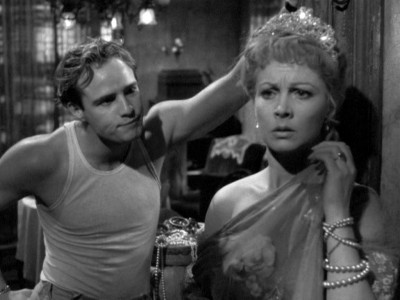
Analysis of Stanley and Blanche of "A Streetcar Named Desire" (1951)
Method acting is a phrase that loosely refers to a family of techniques by which actors try to create in themselves the thoughts and emotions of their characters in an effort to develop lifelike performances. This is an acting method that was adopted by the star of "A Street Car Named Desire"(1951), Marlon Brando, "a role in which the actor and character seem almost indistinguishable" (The Film Experience: An Introduction pp.72). His performance in this very controversial (at least controversial for its time) film further demonstrated how he employed method acting in the film.

STANLEY KOWALSKI
Marlon Brando plays a tough Polish character by the name of Stanley Kowalski in the film "A Streetcar Named Desire" (1951). At first, it appears to the audience that Stanley is a hero of sorts, and that he is passionate towards his wife and loyal to his friends. Although. Stanley possesses an aggressive personality and this shows in his love of work and fighting. During the development of the film, Stanley develops an intense hate for Blanche (played by Vivien Leigh) and finds suspicion in most of the activities she takes part in. Also, he does not trust her, nor does he like the fact she takes he and his friends for fools when she makes attempts to fool them and manipulate them. His hatred towards her is even more exemplified when he searches into her past to find out her true story and then attempts to ruin her relationship with Mitch (played by Karl Malden). Stanley's originally thought to be down to earth personality was proven wrong by the end of the film. His forms of amusement included gambling, sex, bowling, and drinking. He shows a degenerative nature in the way that he treats his wife and the first time we saw him hit her was not the first time he hit her. When he rapes Blanche, he shows even less remorse for his brutal actions.

BLANCHE DUBOIS
Vivien Leigh plays Blanche,a former high school teacher from Laurel, Mississippi and older sister to the Stella, the wife of Stanley. Blanche is a fragile woman both physically and emotionally. She is also a very insecure women, as she fishes for compliments often, but rarely gets a response throughout the course of the film unless they come from Mitch. Blanche is a flirt. She has strong sexual urges and has apparently had many lovers in her day. Also, she comes off as being delusional of sorts and doesn't seem to have a full grasp on reality, while she prefers to live in her imagination rather than face the facts of the 'real world'. Blanche is a woman who tends to make an attempt to manipulate most of the people that she comes into contact with, or lies to them in some way. An example of this would be when Stanley asks her if she would like a shot and she says "I rarely touch it". This is a boldface lie, as she drinks often and covers it up in a very poor manner. Another thing she does is flirt, often. She seems to be in hot pursuit of Stanley's buddy Mitch and the two come to an agreement to be married. Stanley, however knows her back round and successfully foils her plans to do so. This leaves her even more alone in her own little world and leads her to be even more delusional.

WORKS CITED
"A Streetcar Named Desire" IMDB.com. Web. 29 Mar. 2010
"A Streetcar Named Desire" filmsite.org. Web. 29 Mar. 2010
"What is Method Acting?" wisegeek.com. Web. 29 Mar. 2010

STANLEY KOWALSKI
Marlon Brando plays a tough Polish character by the name of Stanley Kowalski in the film "A Streetcar Named Desire" (1951). At first, it appears to the audience that Stanley is a hero of sorts, and that he is passionate towards his wife and loyal to his friends. Although. Stanley possesses an aggressive personality and this shows in his love of work and fighting. During the development of the film, Stanley develops an intense hate for Blanche (played by Vivien Leigh) and finds suspicion in most of the activities she takes part in. Also, he does not trust her, nor does he like the fact she takes he and his friends for fools when she makes attempts to fool them and manipulate them. His hatred towards her is even more exemplified when he searches into her past to find out her true story and then attempts to ruin her relationship with Mitch (played by Karl Malden). Stanley's originally thought to be down to earth personality was proven wrong by the end of the film. His forms of amusement included gambling, sex, bowling, and drinking. He shows a degenerative nature in the way that he treats his wife and the first time we saw him hit her was not the first time he hit her. When he rapes Blanche, he shows even less remorse for his brutal actions.

BLANCHE DUBOIS
Vivien Leigh plays Blanche,a former high school teacher from Laurel, Mississippi and older sister to the Stella, the wife of Stanley. Blanche is a fragile woman both physically and emotionally. She is also a very insecure women, as she fishes for compliments often, but rarely gets a response throughout the course of the film unless they come from Mitch. Blanche is a flirt. She has strong sexual urges and has apparently had many lovers in her day. Also, she comes off as being delusional of sorts and doesn't seem to have a full grasp on reality, while she prefers to live in her imagination rather than face the facts of the 'real world'. Blanche is a woman who tends to make an attempt to manipulate most of the people that she comes into contact with, or lies to them in some way. An example of this would be when Stanley asks her if she would like a shot and she says "I rarely touch it". This is a boldface lie, as she drinks often and covers it up in a very poor manner. Another thing she does is flirt, often. She seems to be in hot pursuit of Stanley's buddy Mitch and the two come to an agreement to be married. Stanley, however knows her back round and successfully foils her plans to do so. This leaves her even more alone in her own little world and leads her to be even more delusional.
WORKS CITED
"A Streetcar Named Desire" IMDB.com. Web. 29 Mar. 2010
"A Streetcar Named Desire" filmsite.org. Web. 29 Mar. 2010
"What is Method Acting?" wisegeek.com. Web. 29 Mar. 2010
Monday, March 22, 2010
"Exploring a Matierial World"
Mise-en-scene: Mise-en-scene "comes from the French term meaning 'placed in scene' or 'onstage', mise-en-scene refers to those elements of a movie that are put in position before the film actually begins and are employed in certain ways once it does" (The Film Experience: An Introduction pp.62).
There are many things that go unnoticed to the average film viewer. These include how settings create environments with meaning for a film, how lighting is used to show different meanings, and how the set is set up and the props are used relate to the story of a film. In fact, mise-en-scene happens in everyday life and nobody really notices or takes the time to relate their surroundings to such a thing. There are two types of mise-en-scene in life, public and private.For example, "the architecture of a town may be described as a public mise-en-scene" (The Film Experience: An Introduction pp.62). This makes perfect sense since movies are all based off of real life in some way, shape, or form. Another example is how a person decorates a room. This can be described as private mise-en-scene. A police station or a court room can provide an authoritative vibe and can also be classified into the first of the previous two categories. This is just an example of how most of the things around us represent mise-en-scene in some way.
Examples of mise-en-scene are not only in the surroundings of the films environment, they also connect to the characters. We as people look at what they're wearing or what they look like. Those first impressions either make us fall in love with a character or hate them with a passion. The emotion that we feel also comes through mise-en-scene and the environment in which the film takes place, along with the characters that are placed in that environment.

Sometimes where the movie takes place is what motivates people to even consider watching it. Some people may be able to relate to the place, live there, had lived there, or have been there. Depending on the memory that the individual had when he or she was there may decide if the film is appealing in the least. Sometimes a historical landmark in a film can also attract a particular audience. Personally, a movie that is set in the dessert is less appealing to me, while a movie that is set in snow among other things is more appealing to me. The most obvious mise-en-scene that people take for granted is the setting. This is the real or fictional place where the events of a film take place.

In the film industry these days, computer generated imagery (CGI) is used often and creates images that are more realistic. "Pan's Labyrinth" (2006) does a good job using computer generated imagery to create many of the characters that were portrayed in the film. The film "portrays the internal world of its lonely child heroine in a rich mise-en-scene constructed from actual sets, costumes, prosthetics, and computer generated imagery" (The Film Experience: An Introduction pp.67).

Monday, March 8, 2010
Film Genres
"A genre is a classification of a group of movies in which the individual films share similar subject matter and similar ways of organizing the subject through narrative and stylistic patterns" (The Film Experience pp.332). The most popular film genres among the public audience are comedy, drama, action/adventure, horror, western and musical. Each genre has primary formulas and conventions which reflect a specific culture or specific historical moments. Genres were immediately put into effect during the early stages of film, although there were not many of them because film was just starting out. The film industry did expand and so did the audience that followed it. As a result, the number of types of films also expanded including: “scenes from the theater, sporting events, and slapstick comedies. And as outdoor filming increased, the first westerns became common subjects” (The Film Experience pp.334).
Between the time period of 1920-1940 studios were formed and certain studios were associated with a certain genre of film. Companies that hold a large name today were identified with these genres. Warner Bros. identified with gangster films by the 1930s, Columbia Pictures was associated with westerns, Universal was identified with horror film, and MGM was associated with musicals and melodramas. All of these companies still remain strong in Hollywood.

1948 to the 1970s was known as the postwar film genre era. 1948 is when the Paramount decision took place, which is when “the Supreme Court ruled that the major studios violated antitrust laws by monopolizing the film business” (The Film Experience pp.335). This undid the studio system and a cornerstone of movie genres. In the 1960s and 1970s independent films came to the surface and started challenging the top genre films. Films also depended upon the recycling on the American culture as well as other cultures throughout the world.

The new Hollywood era began in 1975 in which box office hits such as Jaws (1975) and Star Wars (1977) hit movie theatres across the nation. The dazzling special effects displayed in both of these films delivered a viewing experience that was never before experienced. The success of the films the first time around prompted the directors to release a sequel, and in Star Wars case release six movies. These progressions also paved the way for films that were created down the road to be open to more than one movie, most commonly trilogies.

Throughout the progression of the film industry more ideas became relevant to directors such as turning a comic book or a video game into a film. However, this was not always a successful feat. The Spider-Man trilogy (2002,2004,2007) is an example of a successful comic book turned film franchise. On a down note, Mortal Kombat (1995) and its sequel Mortal Kombat: Annihilation (1997) are examples of video game film gone bad. However, there is always some good that goes with the bad and a director cannot hit on a film every time, or it is very rare to see a director produce an award winning film every time. In conclusion, genres play a large part in the attraction of an audience to a specific film and accommodate the viewing needs of every type of person.

Between the time period of 1920-1940 studios were formed and certain studios were associated with a certain genre of film. Companies that hold a large name today were identified with these genres. Warner Bros. identified with gangster films by the 1930s, Columbia Pictures was associated with westerns, Universal was identified with horror film, and MGM was associated with musicals and melodramas. All of these companies still remain strong in Hollywood.

1948 to the 1970s was known as the postwar film genre era. 1948 is when the Paramount decision took place, which is when “the Supreme Court ruled that the major studios violated antitrust laws by monopolizing the film business” (The Film Experience pp.335). This undid the studio system and a cornerstone of movie genres. In the 1960s and 1970s independent films came to the surface and started challenging the top genre films. Films also depended upon the recycling on the American culture as well as other cultures throughout the world.

The new Hollywood era began in 1975 in which box office hits such as Jaws (1975) and Star Wars (1977) hit movie theatres across the nation. The dazzling special effects displayed in both of these films delivered a viewing experience that was never before experienced. The success of the films the first time around prompted the directors to release a sequel, and in Star Wars case release six movies. These progressions also paved the way for films that were created down the road to be open to more than one movie, most commonly trilogies.
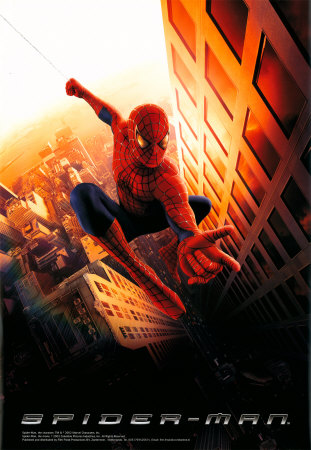
Throughout the progression of the film industry more ideas became relevant to directors such as turning a comic book or a video game into a film. However, this was not always a successful feat. The Spider-Man trilogy (2002,2004,2007) is an example of a successful comic book turned film franchise. On a down note, Mortal Kombat (1995) and its sequel Mortal Kombat: Annihilation (1997) are examples of video game film gone bad. However, there is always some good that goes with the bad and a director cannot hit on a film every time, or it is very rare to see a director produce an award winning film every time. In conclusion, genres play a large part in the attraction of an audience to a specific film and accommodate the viewing needs of every type of person.

Monday, March 1, 2010
Mulholland Drive

"Mulholland Drive" (2001) is a psychological thriller by director David Lynch, which is headlined by Naomi Watts, Laura Elena Harring, and Justin Theroux. The director aimed to take viewers on a wild, confusing, psychological roller coaster. From a personal perspective, "Mulholland Drive" was one of, if not the most, confusing movies that I have ever seen. This film was originally made with plans to become a television series, but after it was presented to television executives, it was rejected. It was left with loose ends because Lynch wanted it to become a television series, so when it became a feature film, an ending was provided to somewhat tie up all of the loose ends. Although, nobody besides David Lynch really knows what transpires as a result to the true ending. This continues speculation and differing opinions throughout the film industry.
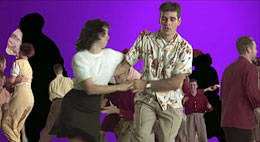
The director gives the audience many clues throughout the course of the film. Although, the viewers have to pay special attention and be able to tie things together, so it is probable they will have to watch the movie a few more times than just once. I for one did not understand the film and could not understand everything that ties the film together. One of the first things that sort of sets up as the first clue given by the director is the jitterbug scene in the beginning of the movie. Although the scene is a little "trippy" it does have a meaning behind it and that may be show of a stepping stone for Betty's move to Hollywood. The jitterbug contest seems to be a just that, a contest. As the film takes place in a modern day time period and not the 1950's or so, so common sense would tell us it is a contest.

Another interesting event is the location of where the accident took place. This location is depicted in both aspects of this film, which is the dream that Diane has and the actual event. During Diane's dream, "Rita" is involved in an accident in which everyone dies but her. During the actual event, Diane is brought to the same location as her dream and is met by Camilla. The first scenario was fiction that was built on the real event of that took place. Also, the line "What are you doing? We don't stop here!" is reprised by both Diane and Rita at the very same place, but have different outcomes. This is just an example of how similar each of these realms were.
The theme of certain places reoccurring throughout the film is noticeable. The restaurant from earlier in the movie "Winkie's" shows up at the beginning of this film and at the end. Also, the restaurant shows up when Diane hires someone in an attempt to kill Camilla. A lot of the locations that were shown throughout Diane's dream were shown throughout the reality, which made the movie even more confusing.
David Lynch purposely did not include an obvious conclusion in this film and continues to make the audience draw their own conclusions by not opening his mouth. Things look as if they will stay that way too.
WORKS CITED
"Mulholland Dr." IMDB.com. Web. 1 Mar. 2010
"Mulholland Dr." wikipedia.org. Web. 1 Mar. 2010
"Lynch's 10 Clues." mulholland-drive.net. Web. 1 Mar. 2010
Subscribe to:
Posts (Atom)